
Built in-house

Kinnect
A private directory that makes what each person does, and how they can help, legible to the people around them.
HL–003 · Private directory · Software
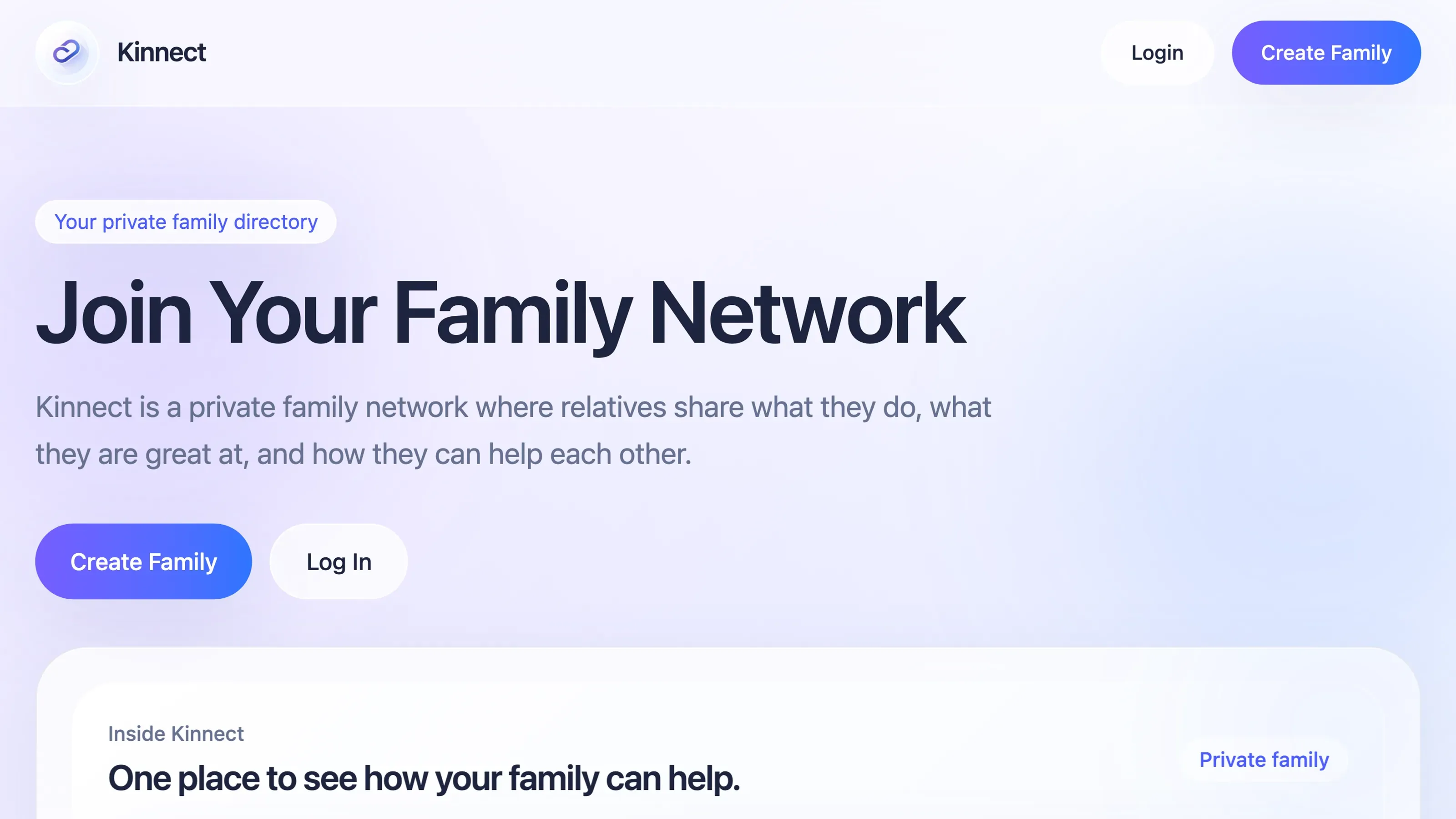
Where the business was.
Families and close networks accumulate expertise nobody has a map of. What each person actually does, what they are good at, and how they could help stays in individual heads rather than anywhere shared.
What had to change.
Relatives had no simple way to understand what each person does, what they are good at, and how they can help — and a directory only earns its keep if people complete their own entry.
How the problem was framed.
Treat it as a product rather than a database. The hard problem in a directory is not storage, it is getting a first profile filled in and a second person to look at it, so onboarding and navigation carry the design rather than the schema.
The decisions, and why.
Clarify onboarding into steps that can be finished in one sitting, then make profiles and connections genuinely easy to move through. Private by default, because the information only gets shared if people trust where it lands.
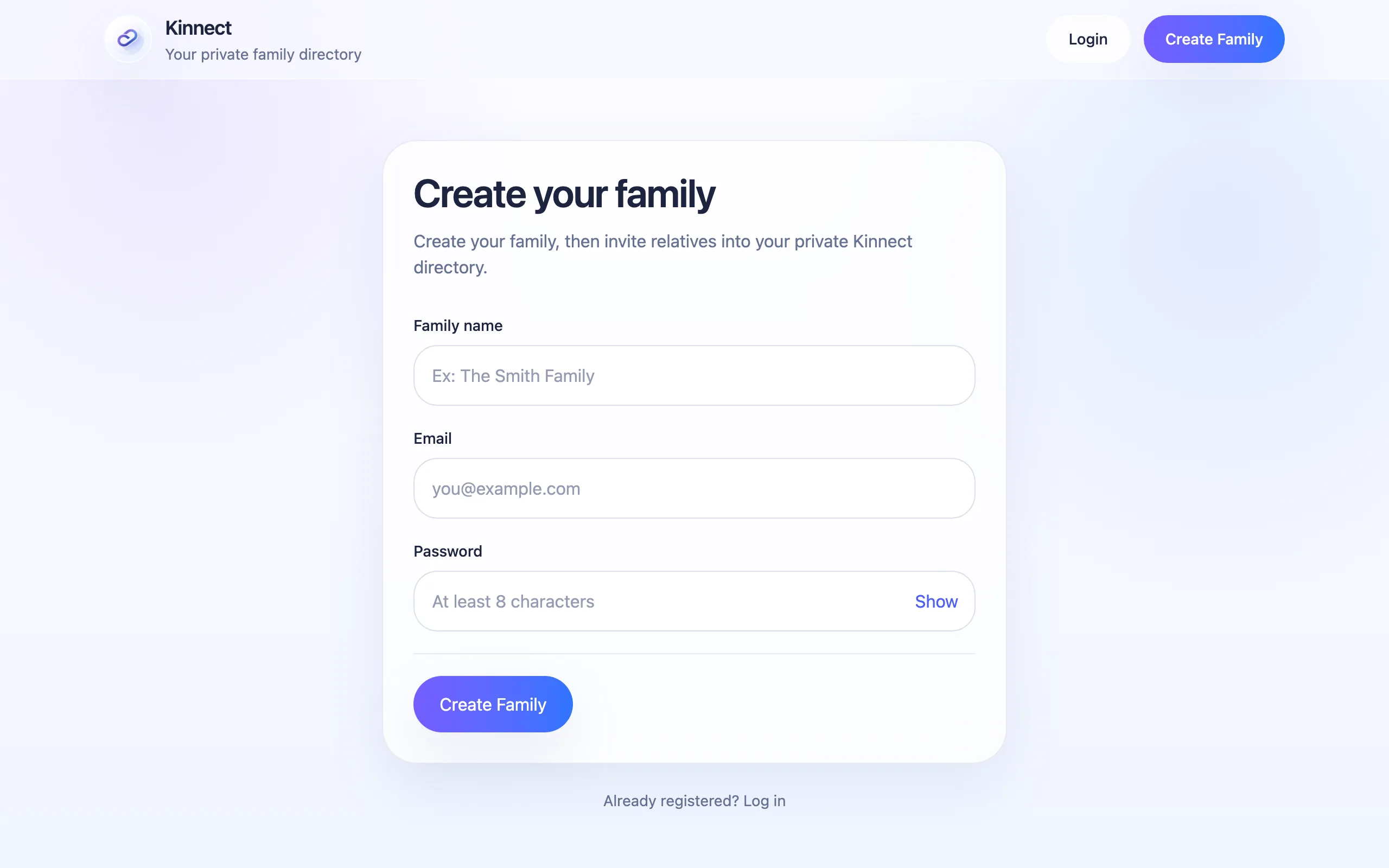
The product opens on one decision — name the family — rather than on a profile to fill in.
What sits behind the interface.
A profile and connection model with guided onboarding, built so the directory stays navigable as it grows rather than only working while it is small.
How it was improved.
Iterated on the onboarding sequence and the profile layout, working through what a person sees first and what they are asked for before the value is obvious.
What exists now.
A working private directory: guided onboarding that can be completed in one sitting, profiles that stay navigable as the network grows, and a permission model that keeps it private by default. It is the studio's own demonstration of custom software capability.